
The project
The EU Long COVID Project has published its final newsletter, marking the completion of four years of collaborative research involving scientists and clinicians from across Europe.
Coordinated by Helsinki University Hospital, the project set out to:
- better understand the mechanisms underlying Long COVID
- improve approaches to diagnosis, rehabilitation and patient care.
The conclusions
The final newsletter summarises the project’s seven key conclusions:
- Many people improve and recover, challenging the pessimistic narratives often seen in public debate and on social media.
- Many people return to work and everyday life, with recovery often supported by flexible work arrangements, professional support and targeted rehabilitation.
- No evidence was found that Long COVID is caused by microclots, gut dysbiosis, persistent viral infection or a distinct autoimmune disorder.
- Long COVID is a highly individual condition, with no reliable biomarker or diagnostic test currently able to distinguish those with persistent symptoms from those who have recovered.
- Genetics appears to play only a minor role, contributing little to predicting who develops Long COVID or how the condition presents.
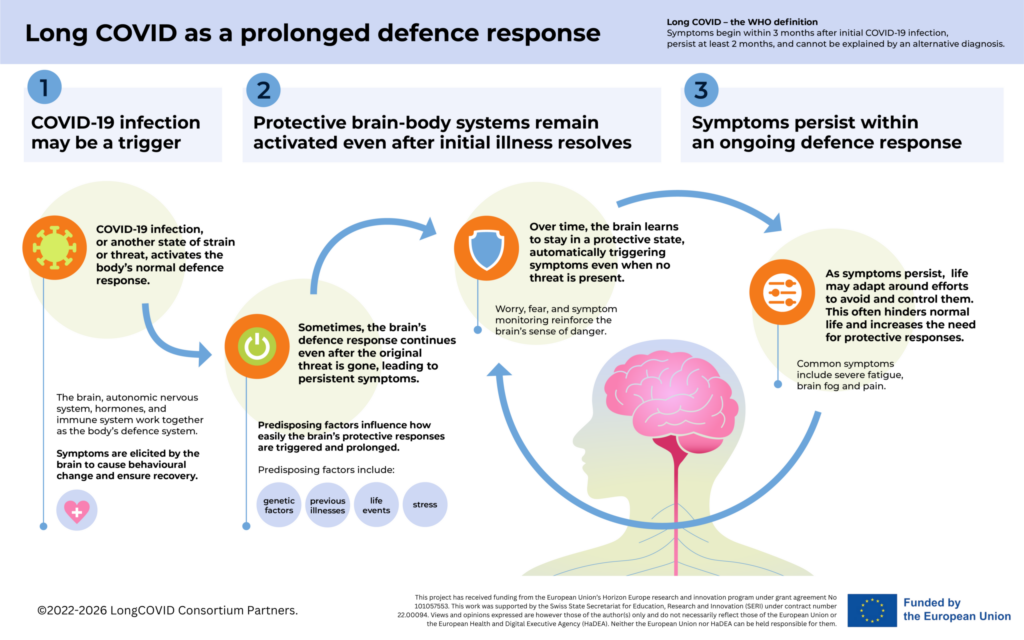
- The findings support a broader understanding of care, recognising biological responses to infection alongside how the brain interprets these signals, including the possibility of an overly sensitive alarm system.
- Expectations, interpretations and social context may also influence symptom persistence and recovery, supporting a holistic approach to rehabilitation.
Learn more
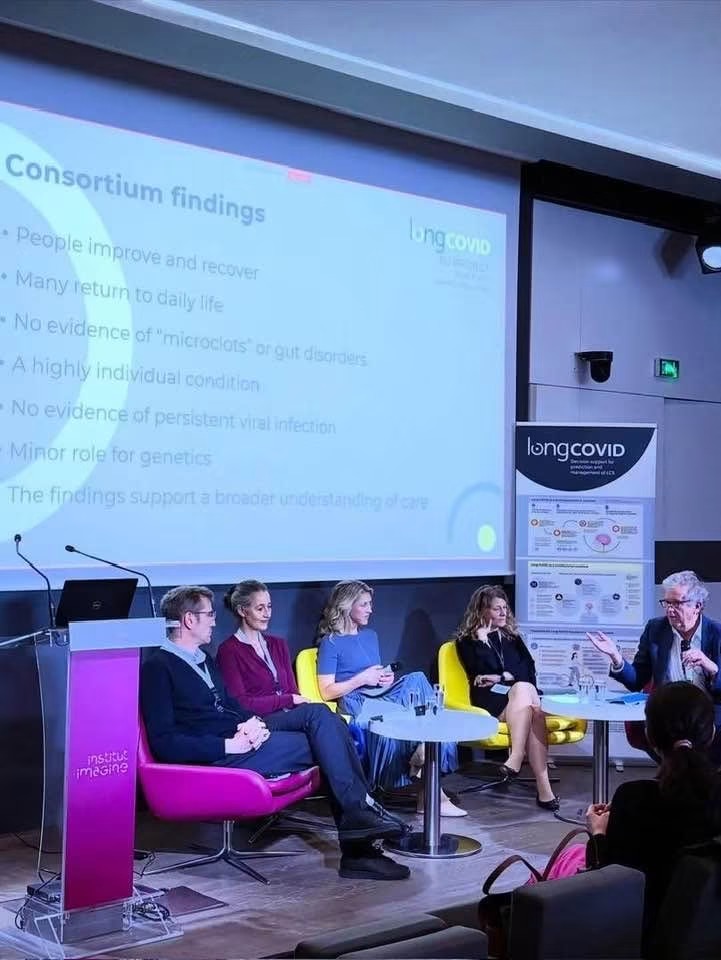
These findings were presented at the project’s final conference in Paris in April 2026
Some members of The Recovery Channel were pleased to take part in the multidisciplinary panel discussion, that gathered researchers, clinicians and recovered patients. This provided valuable perspectives on ongoing challenges and future directions in Long COVID care and research
The final report includes 18 peer reviewed publications and infographics which give insights into Long Covid and recovery.
Learn more: